
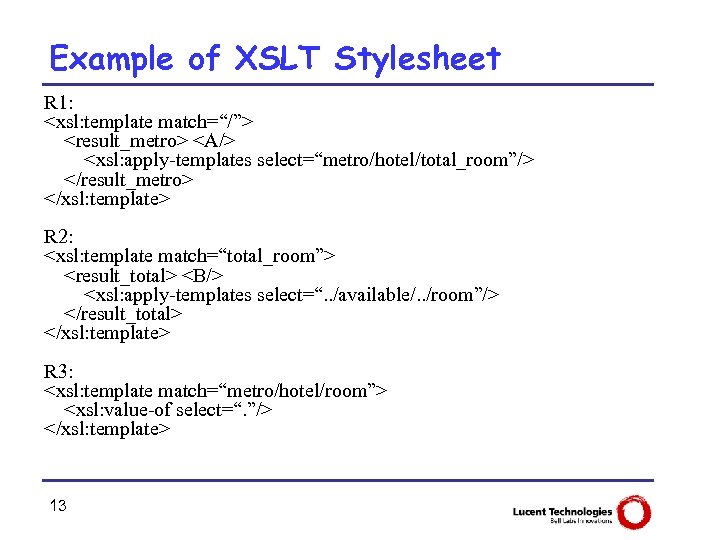
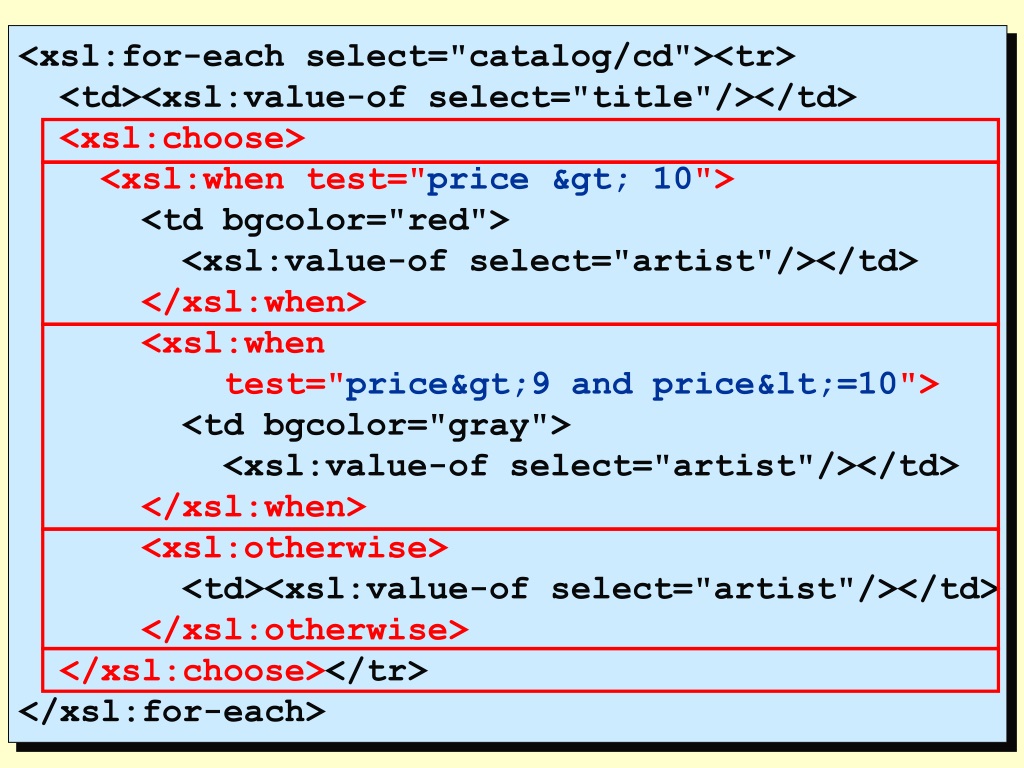
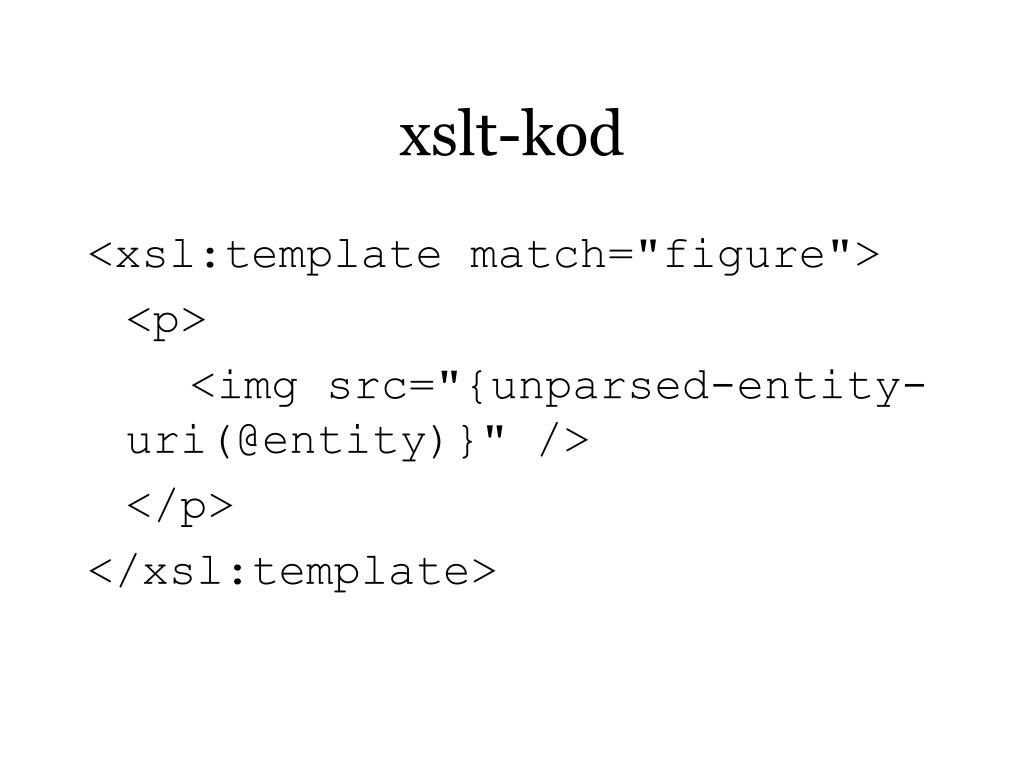
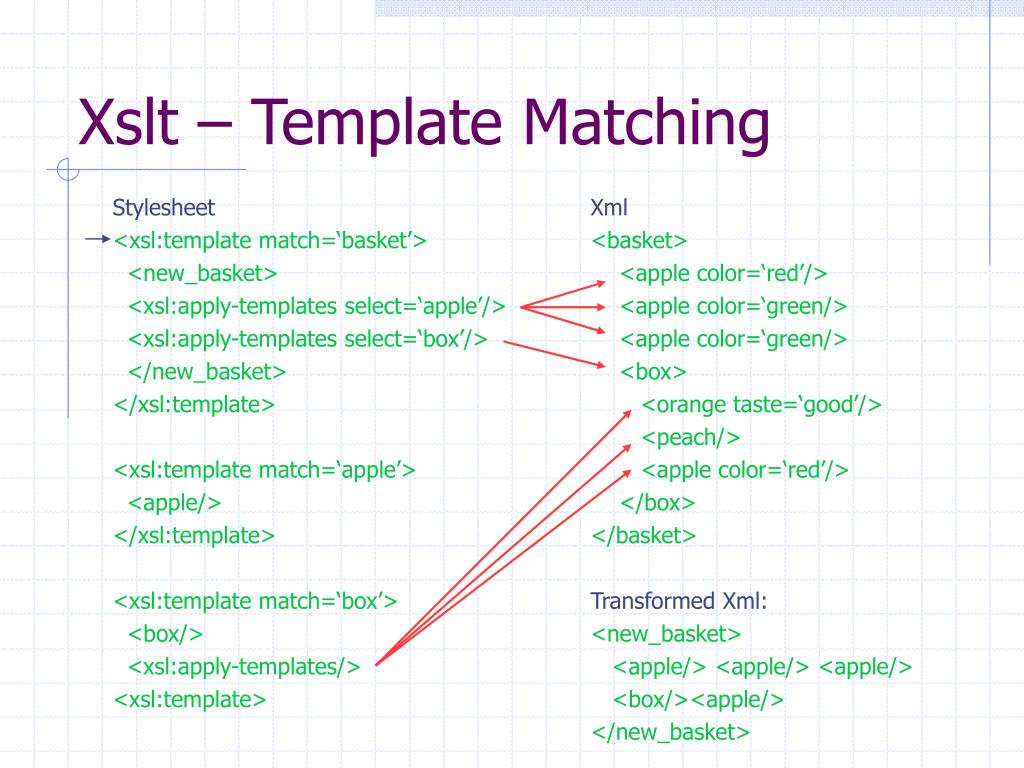
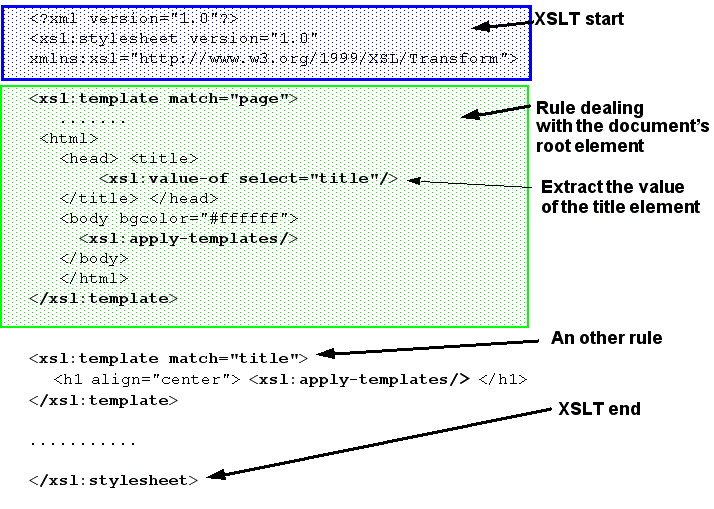
Web i am trying to do a conditional match on an xml and to return the value from a sibling node. Web in essence, an xslt stylesheet is a set of rules, called templates, which declare that any node that matches this specific pattern should be manipulated in this. The xsl:template element contains the @match attribute that contains a matching pattern or xpath applied at the input nodes. Web i am trying to filter the xml by what i get in a parameter. The match attribute can also be used to.
There must be either a match or name attribute, or. Web i am trying to do a conditional match on an xml and to return the value from a sibling node. What is the correct sintax to match on only those courses that have dep_code equal to 'something' or in this. Web when it matches an xml node, the template is invoked by the processor. Xslt stands for xsl transformations.
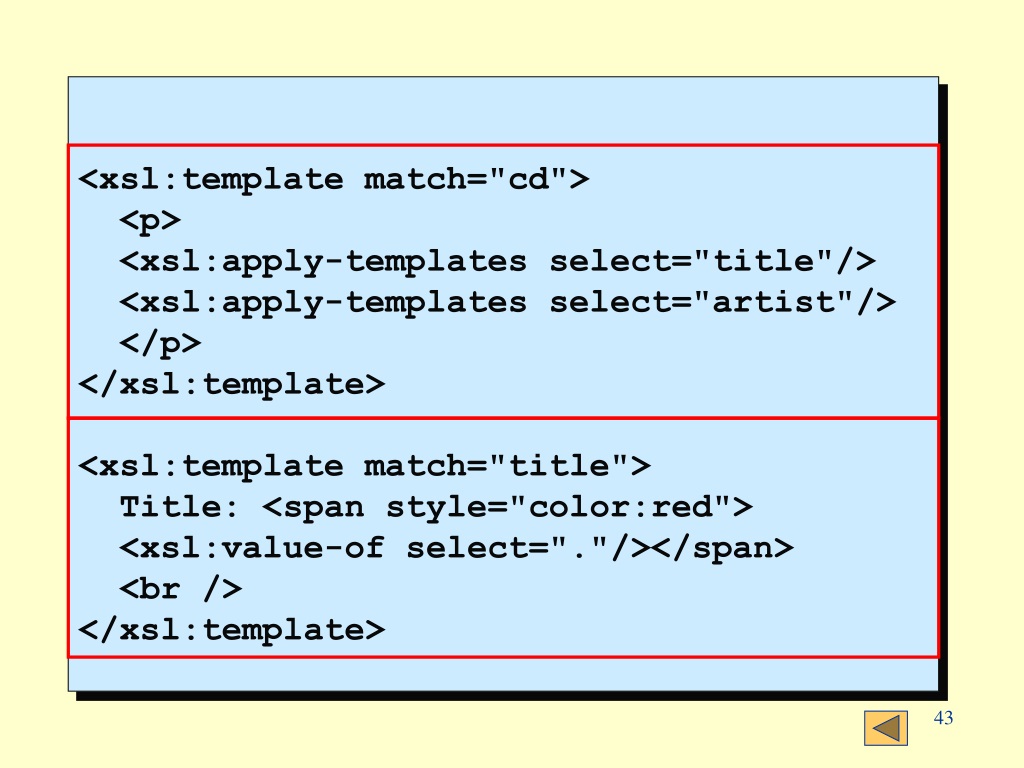
Web when it matches an xml node, the template is invoked by the processor. This tutorial will teach you how to use xslt to transform xml. Web the xslt apply template tag is used to apply the appropriate templates in the context of the selected node. This tag is used to direct the processor to apply. Template match> matches the root node of the source document.
Composing XSL Transformations with XML Publishing Views Chengkai
Xsl Template Match
XSLT match How match Work in XSLT with Examples and Advantages / XSL

Xsl Template Match
PPT XSLT 2 PowerPoint Presentation, free download ID4579774
Xsl Template Match
xsltemplate ⚡️ XSLT 3.1 with examples
Xsl Template Match
Xsl Template Match Xslt Design Patterns Ppt Download williamsonga.us

Xsl Apply Templates

There must be either a match or name attribute, or. Web the xsl:template element is used to define a template that can be applied to a node to produce a desired output display. Web the <<strong>xsl</strong>:template> element contains rules to apply when a specified node is matched. In that particular case the / means the root of the xml document. Web the <<strong>xsl</strong>:template> element is used to build templates. Web xslt <<strong>template</strong>> element is a basic building block in xslt and it provides a way to define rules for transforming specific elements into a source xml document. The match attribute can also be used to. Web i am trying to filter the xml by what i get in a parameter. Template match> matches the root node of the source document. This element must have either the match attribute or the name attribute set. Web in essence, an xslt stylesheet is a set of rules, called templates, which declare that any node that matches this specific pattern should be manipulated in this. If we add a select attribute to the. Web when it matches an xml node, the template is invoked by the processor. A in xslt, there are various elements that come with a match attribute (such. Web (ii) match template:
Web The Xslt Apply Template Tag Is Used To Apply The Appropriate Templates In The Context Of The Selected Node.
Web i am trying to filter the xml by what i get in a parameter. Web the match attribute indicates on which parts the template transformation is going to be applied. Web the <<strong>xsl</strong>:template> element contains rules to apply when a specified node is matched. In that particular case the / means the root of the xml document.
Web At First Glance, Both Seem To Take Xpath Expressions, But In Fact They're Quite Different.
The match attribute is used to associate the template with an xml element. This tag is used to direct the processor to apply. The match attribute can also be used to. Template match> matches the root node of the source document.
This Element Must Have Either The Match Attribute Or The Name Attribute Set.
If we add a select attribute to the. The match attribute is used to associate a template with an xml element. Web the xsl:template element is used to define a template that can be applied to a node to produce a desired output display. A in xslt, there are various elements that come with a match attribute (such.
I Would Like To Match On The Records Which Have The Attribute Of Gender.
Web when it matches an xml node, the template is invoked by the processor. The xsl:template element contains the @match attribute that contains a matching pattern or xpath applied at the input nodes. Web xsl (extensible stylesheet language) is a styling language for xml. Xslt stands for xsl transformations.