
Web the following policy and safe practices are established to prevent the spread of disease resulting from handling blood or other potentially infectious materials (opim) during the course of work. Web the intent of this exposure control plan is to prevent bloodborne infections by eliminating or minimizing employee exposures to blood, blood products, and other potentially infectious materials (opim). Web the intent of this exposure control plan is to prevent bloodborne infections by eliminating or minimizing employee exposures to blood, blood products, and other potentially infectious materials (opim). Existence of other bloodborne diseases. Methods for recognizing tasks and other activities that may involve exposure to blood and other potentially infectious materials.
A central component of the requirements of the standard is the development of an exposure control plan (ecp). Methods for recognizing tasks and other activities that may involve exposure to blood and other potentially infectious materials. Web the model exposure control plan is intended to serve employers as an example exposure control plan which is required by the bloodborne pathogens standard. Web osha’s bloodborne pathogens standard protects employees who work in occupations where they are at risk of exposure to blood or other potentially infectious materials. This ecp is applicable to unc charlotte employees who are exposed to bloodborne pathogens during the normal scope of their job duties.
This ecp has been developed in accordance with the osha bloodborne pathogens standard, 29cfr 1910.1030. Existence of other bloodborne diseases. This ecp is applicable to unc charlotte employees who are exposed to bloodborne pathogens during the normal scope of their job duties. Ut exposure control plan and its availability. Web the purpose of this exposure control plan is to identify and minimize any and all occupational exposure to blood or other infectious body fluids by contractors, employees, studio clients, tattoo artists, body piercers, apprentices, managers or owners.
Bloodborne pathogens exposure control plan

Bloodborne Pathogens Exposure Control Plan Template
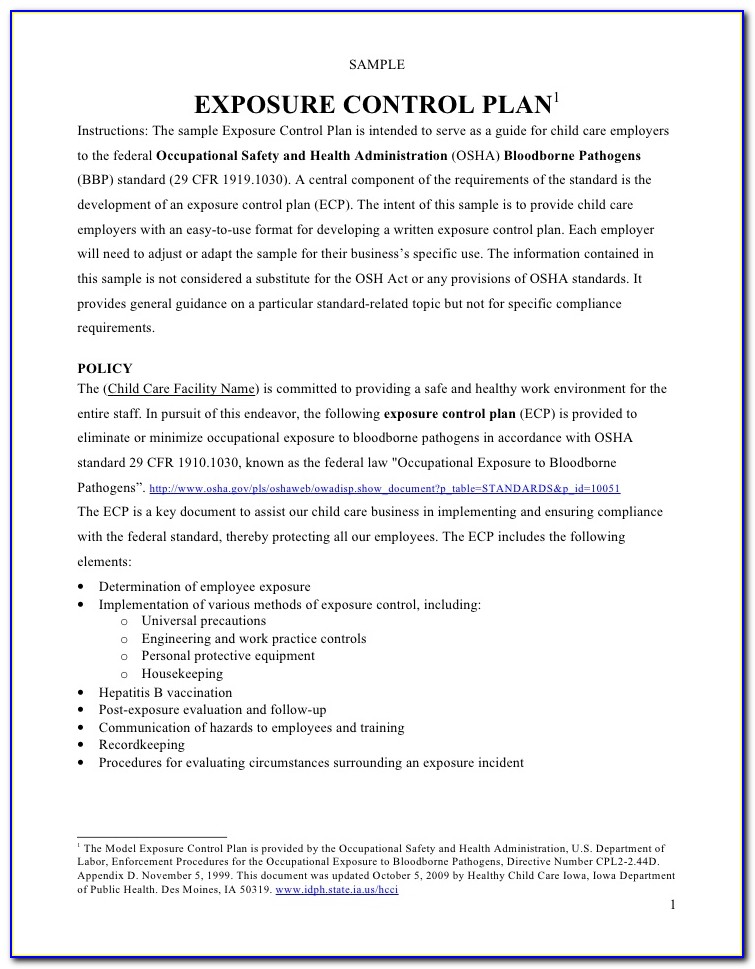
Exposure Control Plan Bloodborne Pathogens and Other Doc Template

Bloodborne Pathogens Exposure Control Plan Template
Bloodborne Pathogen Exposure Control Plan City of Eugene Doc Template

Templates Bloodborne Pathogens and BBP Exposure Control Plan
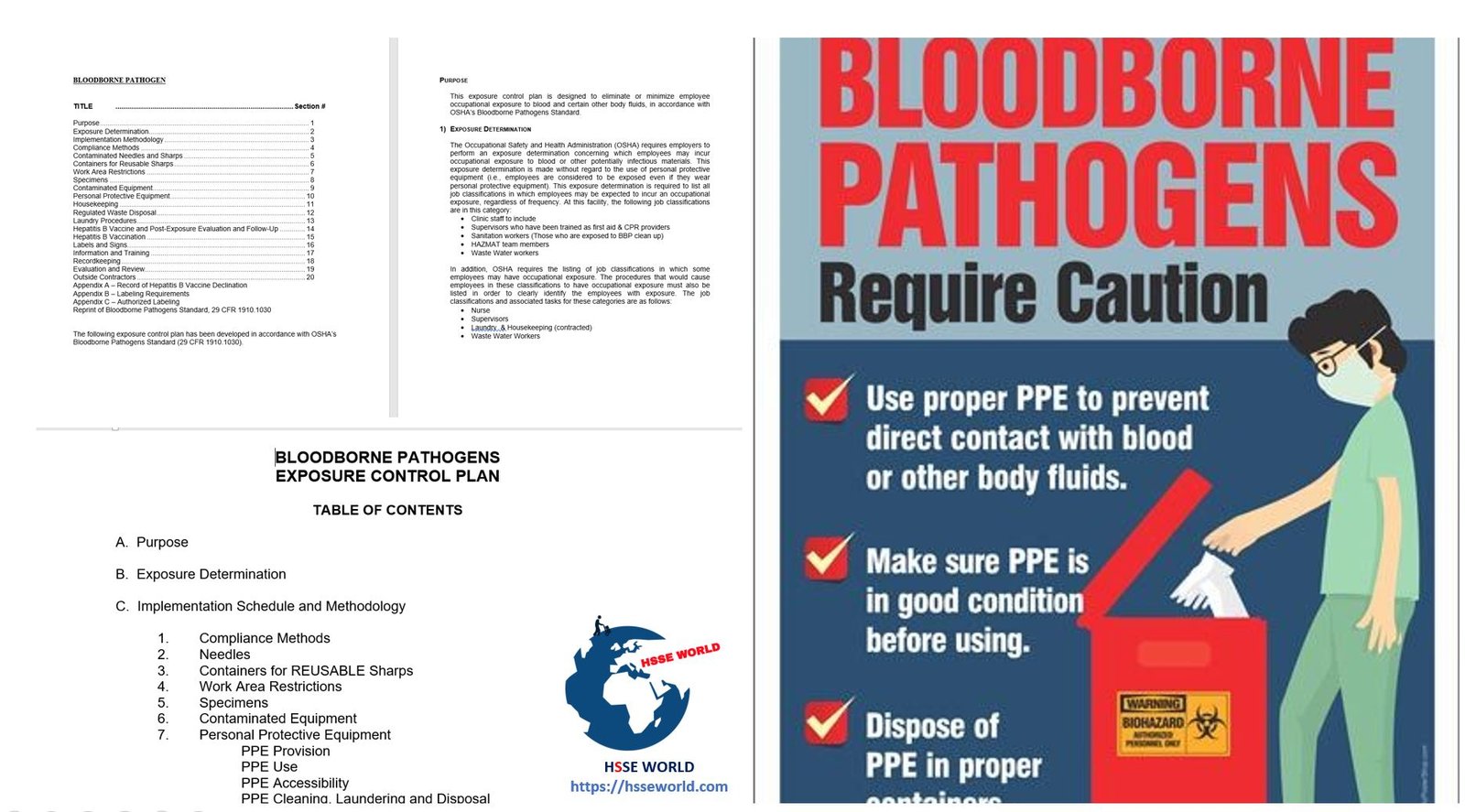
OSHA Bloodborne Pathogens Exposure Control Plan Template

Exposure Control Plan Template Best Professional Templates
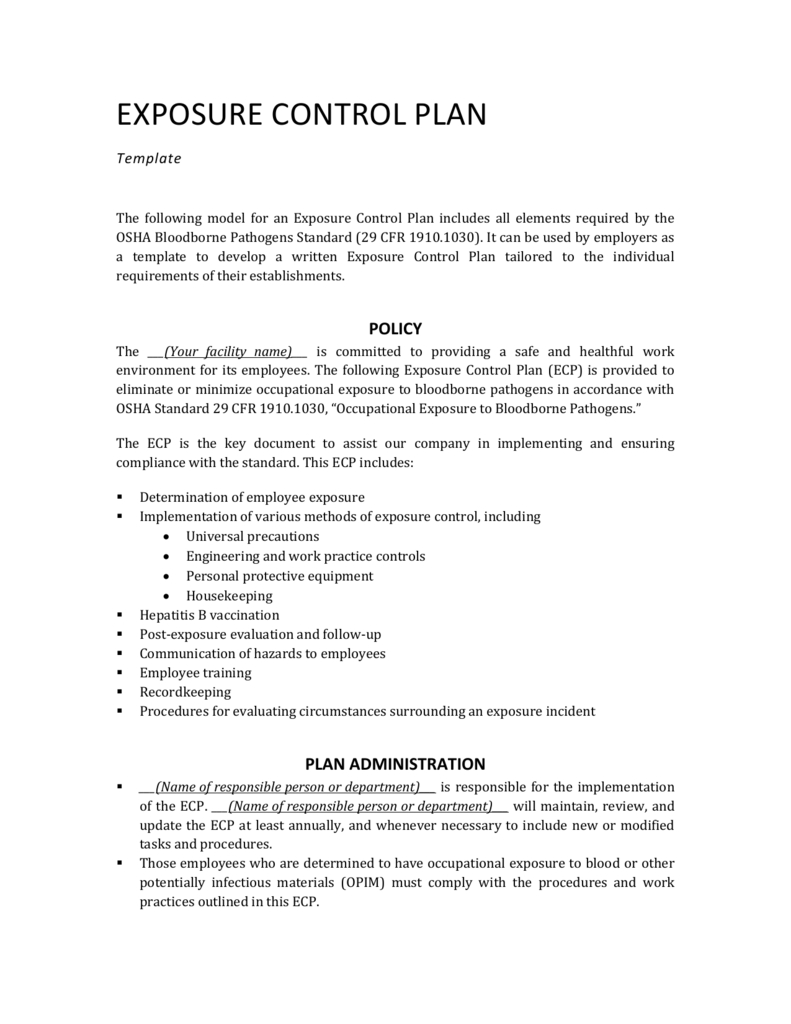
Bloodborne Pathogens Exposure Control Plan Template
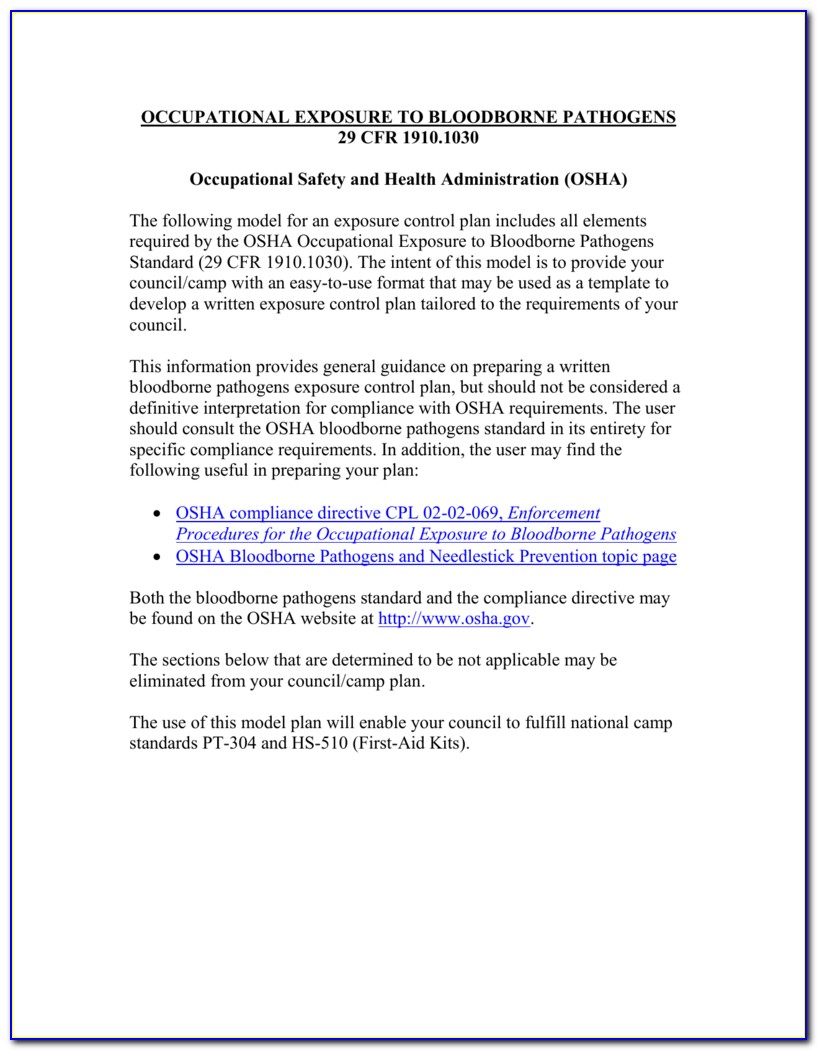
Local Health Department Exposure Control Plan Template (OSHA

Web the model exposure control plan is intended to serve employers as an example exposure control plan which is required by the bloodborne pathogens standard. Web the purpose of this exposure control plan is to identify and minimize any and all occupational exposure to blood or other infectious body fluids by contractors, employees, studio clients, tattoo artists, body piercers, apprentices, managers or owners. Web the intent of this exposure control plan is to prevent bloodborne infections by eliminating or minimizing employee exposures to blood, blood products, and other potentially infectious materials (opim). Existence of other bloodborne diseases. This ecp is applicable to unc charlotte employees who are exposed to bloodborne pathogens during the normal scope of their job duties. Web the intent of this exposure control plan is to prevent bloodborne infections by eliminating or minimizing employee exposures to blood, blood products, and other potentially infectious materials (opim). Ut exposure control plan and its availability. Web the texas department of state health services (department) bloodborne pathogens exposure control plan (plan) requires employers to perform an exposure determination for employees who have occupational exposure to blood or. Web osha’s bloodborne pathogens standard protects employees who work in occupations where they are at risk of exposure to blood or other potentially infectious materials. Methods for recognizing tasks and other activities that may involve exposure to blood and other potentially infectious materials. Web the following policy and safe practices are established to prevent the spread of disease resulting from handling blood or other potentially infectious materials (opim) during the course of work. Web epidemiology, symptoms and modes of transmission of bloodborne diseases including hiv, hbv and hcv; This ecp has been developed in accordance with the osha bloodborne pathogens standard, 29cfr 1910.1030. A central component of the requirements of the standard is the development of an exposure control plan (ecp). Web this exposure control plan (ecp) is designed to eliminate or minimize employee exposure to bloodborne pathogens.
Web Epidemiology, Symptoms And Modes Of Transmission Of Bloodborne Diseases Including Hiv, Hbv And Hcv;
Existence of other bloodborne diseases. This ecp has been developed in accordance with the osha bloodborne pathogens standard, 29cfr 1910.1030. Web the following policy and safe practices are established to prevent the spread of disease resulting from handling blood or other potentially infectious materials (opim) during the course of work. Methods for recognizing tasks and other activities that may involve exposure to blood and other potentially infectious materials.
Ut Exposure Control Plan And Its Availability.
This ecp is applicable to unc charlotte employees who are exposed to bloodborne pathogens during the normal scope of their job duties. Web osha’s bloodborne pathogens standard protects employees who work in occupations where they are at risk of exposure to blood or other potentially infectious materials. Web the intent of this exposure control plan is to prevent bloodborne infections by eliminating or minimizing employee exposures to blood, blood products, and other potentially infectious materials (opim). Web the model exposure control plan is intended to serve employers as an example exposure control plan which is required by the bloodborne pathogens standard.
A Central Component Of The Requirements Of The Standard Is The Development Of An Exposure Control Plan (Ecp).
Web this exposure control plan (ecp) is designed to eliminate or minimize employee exposure to bloodborne pathogens. Web the texas department of state health services (department) bloodborne pathogens exposure control plan (plan) requires employers to perform an exposure determination for employees who have occupational exposure to blood or. Web the purpose of this exposure control plan is to identify and minimize any and all occupational exposure to blood or other infectious body fluids by contractors, employees, studio clients, tattoo artists, body piercers, apprentices, managers or owners. Web the intent of this exposure control plan is to prevent bloodborne infections by eliminating or minimizing employee exposures to blood, blood products, and other potentially infectious materials (opim).